




Introduction
If you have searched online recently, you may have come across a website called UploadBlog.com and wondered what it actually does. Many writers, students, and small business owners are asking the same question: what is uploadblog.com and how does it work? In simple terms, it is a web-based publishing platform where people can write articles and share them with online readers without building their own website.
This guide breaks everything down in plain language. You will learn how the platform works, who it is best for, what features it offers, and what to keep in mind before you sign up. We will also look at safety tips, pricing questions, and how this type of platform compares to running your own blog. By the end, you will have a clear, honest picture of the platform, based on publicly available information as of 2026.
Whether you are a curious reader, a beginner writer, or a business owner exploring content marketing, this article gives you everything you need in one place — written simply, so even a student in grade seven could follow along.
UploadBlog.com in Simple Words
UploadBlog.com is best described as a hosted content publishing site. Instead of paying for web hosting, picking a theme, and installing software, a writer simply creates an account and starts typing. The platform stores the article, formats it, and places it online for readers to find.
Think of it like a shared digital magazine. Many different authors contribute posts on topics like technology, business, finance, and lifestyle, and the platform organizes everything into categories. This is different from a personal blog on WordPress or Blogger, where one person usually owns and controls the entire site.
Because there is no official technical documentation published by the company, most of what is known comes from the platform’s own pages and independent reviews. Based on this public information, the site positions itself as a simple entry point for anyone who wants to publish content quickly, including students, freelance writers, startups, and small businesses looking for extra visibility online.
It is worth noting that the platform appears to serve users in several regions, including the United States and Australia, and it markets itself partly as an alternative to older blogging tools. If you are trying to understand what is uploadblog.com and how does it work? before signing up, the short answer is: it is a free-to-join writing and publishing space built around simplicity rather than deep customization.
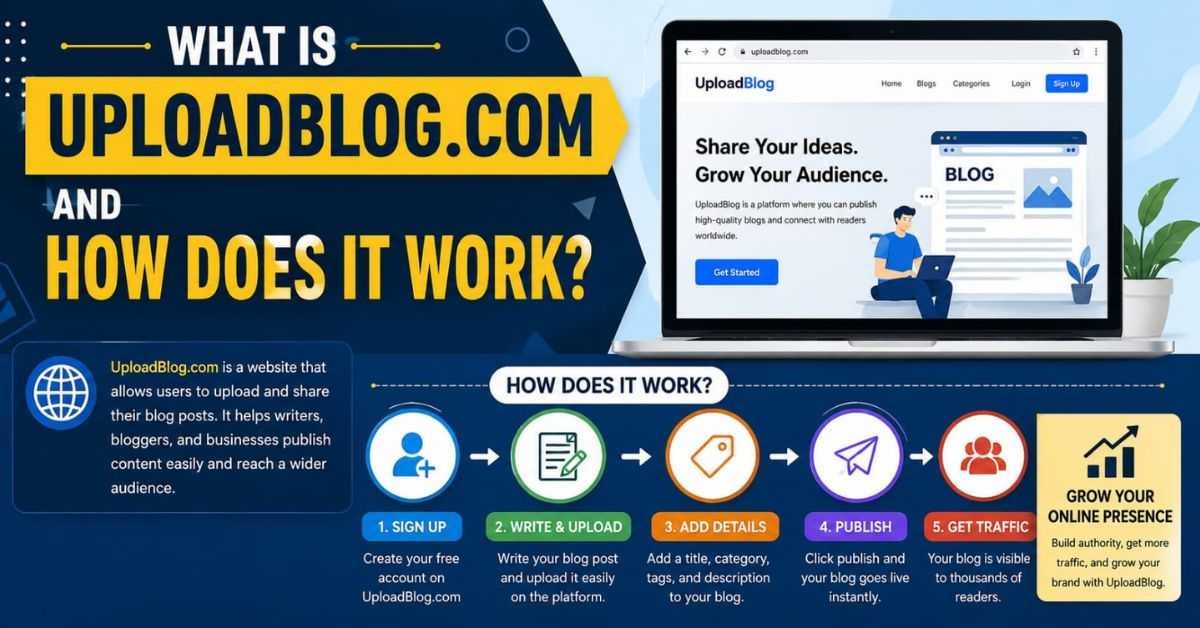
How Does UploadBlog.com Work, Step by Step
The general workflow follows a pattern common to most hosted blogging platforms. Here is what typically happens, based on the platform’s own onboarding pages and third-party walkthroughs.
| Step | What Happens | Why It Matters |
| 1. Sign Up | Create an account with an email address | Gives you a personal dashboard |
| 2. Set Up Profile | Add your name, bio, and interests | Helps readers trust your posts |
| 3. Write a Post | Use the built-in editor to add text, images, and links | No coding skills needed |
| 4. Choose a Category | Pick a topic like tech, business, or lifestyle | Improves how easily readers find your work |
| 5. Submit for Review | Send the draft for approval | Helps maintain content quality |
| 6. Publish | The article goes live once approved | Your content becomes visible to readers |
This structure shows why so many beginners search for what is uploadblog.com and how does it work? — the process removes the technical steps that usually stop new writers from starting a blog. There is no need to buy a domain name, set up hosting, or manage plugins. You simply write, submit, and wait for approval.
One thing to remember is that publishing platforms like this often use an editorial review stage before an article goes live. This step is meant to check for quality and guideline compliance, though the exact rules are not always published in detail. New users should read any available writing guidelines carefully before submitting their first post.
Learn what UploadBlog.com is and how it works, with insights, trends, and updates in videogames PlayBattleSquare.
Key Features Worth Knowing
Based on the platform’s public pages, a few features stand out for anyone comparing it to other publishing tools.
- Simple editor: The writing tool works similarly to Google Docs or Microsoft Word, with options for headings, bullet points, images, and links.
- Category system: Posts are sorted into topics such as technology, business, finance, and lifestyle, which helps readers browse by interest.
- Trending and featured sections: Popular or editor-selected posts appear on the homepage, giving extra visibility to strong content.
- No hosting required: Writers do not need to manage servers, install security updates, or pay for a domain.
- Multi-region reach: The platform appears to attract readers from more than one country, which can help writers reach a wider audience than a brand-new personal blog might.
These features explain why the platform is often recommended to beginners rather than established brands. It trades deep customization for speed and simplicity. A person who wants a fully branded website with a custom design, advanced analytics, and full ownership of their content usually needs a self-hosted solution instead.
Because there is limited official documentation, some listed features may change over time. It is a good habit to check the current version of the site before relying on any single feature for an important project.
Who Should Consider Using It
Not every platform fits every writer, so it helps to think about your own goals first.
Good fit for:
- Students who want to build a writing portfolio without spending money
- Freelance writers testing new topics before pitching clients
- Small businesses that want extra content published quickly for visibility
- Hobby writers who enjoy sharing ideas without managing a website
Not an ideal fit for:
- Businesses that need full control over branding and design
- Writers who want detailed traffic and revenue analytics
- Anyone building a long-term, professional brand that depends on owning their content platform
If your main goal is speed and low cost, this type of platform can work well as a starting point. If you are planning a serious, long-term content strategy, it is usually better used alongside a self-hosted site rather than as a replacement for one, similar to how our guide to starting a personal blog explains the trade-offs between hosted and self-hosted platforms.
Is It Free or Paid?
This is one of the most common questions people ask, right after wondering what is uploadblog.com and how does it work?. Based on publicly available pages, the platform is generally described as free to join, meaning writers can sign up and publish without an upfront cost.
However, there is no verified, detailed pricing page confirming whether premium features, faster review times, or promotional boosts exist for a fee. Some platforms in this category offer optional paid upgrades later, even if the basic sign-up remains free. Because this detail is not clearly documented, it is best to check the current sign-up page directly before assuming anything about cost.
A simple rule for any new platform: never enter payment details unless you can clearly see what you are paying for, along with a refund policy and contact information. This is standard advice from consumer protection organizations, including guidance published by the Federal Trade Commission on evaluating unfamiliar websites before sharing personal or payment information.
Content Categories and Topics
The homepage typically organizes articles into a handful of recurring categories. Based on available reviews, these usually include technology, business, finance, lifestyle, health, education, travel, and fashion, with fashion sometimes appearing as its own dedicated section.
| Category | Typical Content | Best For |
| Technology | Guides, reviews, how-to articles | Writers covering gadgets and software |
| Business | Marketing tips, startup advice | Entrepreneurs and freelancers |
| Finance | Budgeting, saving, investing basics | Personal finance writers |
| Lifestyle | Wellness, home, daily living | General interest writers |
| Fashion | Trends, style guides | Fashion and beauty creators |
Choosing the right category matters more than it might seem. A well-tagged post is easier for readers to find and may also help search engines understand what the article is about. Writers who tag posts across too many categories sometimes see their work spread thin, while a tightly focused post in one category can perform better within that specific feed.
How It Compares to Running Your Own Blog
Instead of a full side-by-side comparison, it helps to look at a few practical differences. A self-hosted blog, built on tools like WordPress, gives you full ownership of your content, design, and data. You control everything, but you are also responsible for hosting costs, security updates, and technical maintenance.
A hosted platform trades some of that control for convenience. You do not manage servers or worry about broken plugins, but you also depend on the platform’s rules, uptime, and policies. If the platform changes its terms or shuts down, your content’s future is less certain than it would be on a site you fully own.
For many beginners, starting on a hosted platform and later moving to a self-hosted site is a common path. It lets new writers build a habit of publishing regularly before investing time and money into a fully independent website. This approach is echoed in general small-business guidance from Forbes Advisor on starting a blog, which notes that ease of entry matters most for first-time writers.
Safety, Privacy, and Trust Tips
Whenever you join a new platform, safety should come first. Since there is no widely published technical security documentation for this site, users should apply the same caution they would use with any newer online platform.
A few practical habits help:
- Use a unique password and consider a password manager
- Avoid sharing sensitive personal information in your public bio
- Read the privacy policy before uploading original work
- Check for contact information and an editorial or “about us” page
- Search independently for recent user reviews before submitting paid content
These steps line up with general online safety advice from university digital literacy programs, such as guidance published by UC Berkeley Library on evaluating the credibility of a website before trusting it with personal information. Applying this kind of checklist to any publishing platform, including this one, is simply good digital hygiene in 2026.
Pros and Cons at a Glance
Weighing the strengths and weaknesses side by side makes the decision easier.
| Pros | Cons |
| Free and quick to join | Limited official documentation |
| No hosting or coding needed | Less design and branding control |
| Built-in reader audience | Monetization details are unclear |
| Good for beginners and students | Not ideal for long-term branding |
| Multiple content categories | Editorial approval may delay publishing |
This kind of balance sheet is useful for anyone comparing several publishing options at once. If speed and simplicity matter most right now, the pros likely outweigh the cons. If long-term ownership and design control matter more, the cons may carry more weight for your specific goals.
Tips to Get the Most Out of the Platform
If you decide to try it, a few habits can improve your results.
First, write with a clear reader in mind rather than just filling space. Search engines and human readers both respond better to genuinely useful writing. Second, use short paragraphs, clear headings, and simple words, since most online readers skim before they commit to reading in full. Third, choose one main category per post instead of tagging everything broadly, since focused posts tend to perform better within a single feed.
Fourth, keep a copy of every article you publish on your own computer or cloud storage. This protects your work even if the platform changes its policies later. Finally, treat your first few posts as a test. Notice what topics get more attention, and adjust your future writing based on real feedback rather than guesses.
These habits apply well beyond one platform. They are useful whenever you are learning what is uploadblog.com and how does it work?, and they also apply to almost any hosted publishing tool you might try in the future, including options covered in our comparison of free blogging tools for beginners.
Frequently Asked Questions (FAQs)
What is uploadblog.com and how does it work? in one sentence?
It is a free, hosted publishing platform where users sign up, write articles, and submit them for review before they go live.
Do I need coding skills to use it?
No. The built-in editor works like a word processor, so no coding or website-building knowledge is required.
Is UploadBlog.com free to join?
Based on public information, sign-up appears to be free, though paid features may exist and should be confirmed on the current site.
Can I make money from posting there?
There is no verified, official information confirming monetization tools, so treat any income claims with caution until confirmed directly.
Is it safe to publish personal writing on the platform?
General safety depends on the platform’s privacy policy and your own habits, such as avoiding sensitive personal details in public posts.
Conclusion
Understanding what is uploadblog.com and how does it work? comes down to one simple idea: it is a hosted platform that lets people publish articles online without building a website from scratch. For students, beginner writers, and small businesses, it offers a fast, low-cost way to share ideas and reach readers. For anyone planning a long-term, fully branded content strategy, it works best as a starting point rather than a final destination.
Before publishing anything, take a few minutes to read the platform’s current policies, check its privacy terms, and keep backup copies of your work. These small habits protect your writing no matter which platform you choose.
If you are ready to start publishing, begin with one well-written article, pick a single clear category, and see how readers respond. That first post is often the best way to learn whether this platform fits your goals.